Author: digiindie
-
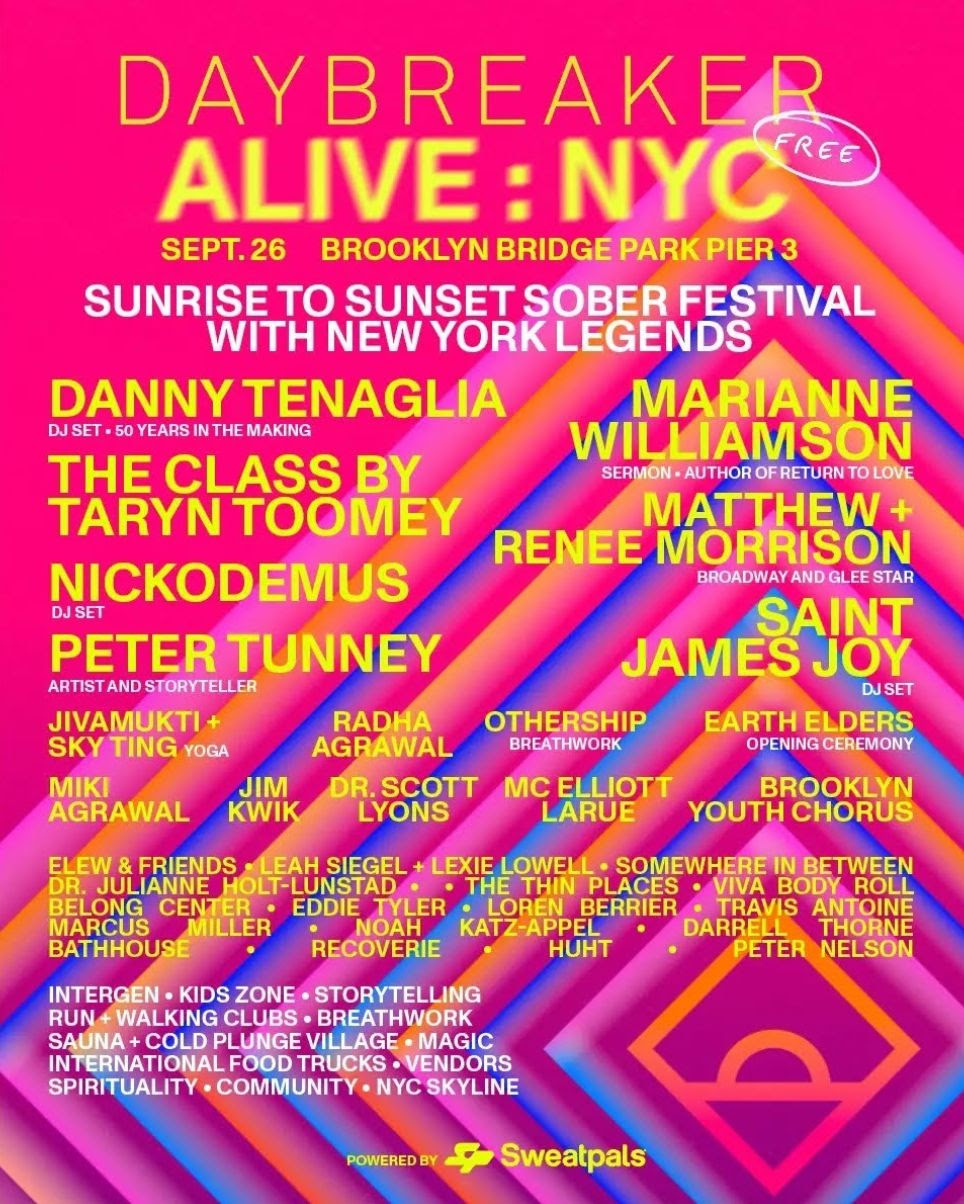
Daybreaker Unveils Initial Lineup for ALIVE : NYC, a New Kind of Sunrise-to-Sunset Sober Music & Wellness Festival, Headlined by NYC Dance Music Legend Danny Tenaglia
Free September 26th experience at Brooklyn Bridge Park brings together NYC dance music legend Danny Tenaglia, Marianne Williamson, Matthew Morrison, Taryn Toomey, leading voices on belonging and social connection, and some of the world’s leading wellness brands around one purpose: to make people feel fully alive
Rather than a traditional music festival, ALIVE combines dance, movement, wellness, spirituality, storytelling, food, play and human connection into a full-day participatory experience
Saturday, September 26th, 2026
Brooklyn Bridge Park, Pier 3
New York City
FREE
FOR MORE INFORMATION AND TO RSVP, PLEASE VISIT:
https://www.daybreaker.com/alive/
After thirteen years building dance floors around the world, Daybreaker is preparing to turn Brooklyn Bridge Park into something it has never attempted before.
On Saturday, September 26th, the Brooklyn-born global movement will present ALIVE : NYC, a free, sunrise-to-sunset sober music and wellness festival at Pier 3 bringing together music, movement, spirituality, wellness, art, storytelling, science, food, play, family programming, and human connection in one immersive experience.
Today, Daybreaker unveiled the first major wave of programming for the event, headlined by legendary New York DJ Danny Tenaglia, and revealing a lineup that could only happen in New York: dance music icons alongside spiritual teachers; Broadway performers alongside social-connection researchers; contemporary artists alongside yoga teachers; and some of the leading names and brands in modern wellness bringing breathwork, transcendental fitness, sauna, cold plunge, movement, recovery, and other experiences into the festival environment.
The idea connecting all of it is deceptively simple: What makes us feel fully alive?
ALIVE is Daybreaker’s attempt to answer that question at city scale. Rather than organizing the day around a traditional succession of headliners and spectators, ALIVE is being designed as a participatory journey whose purpose is to help people experience as many different pathways to aliveness as possible. Guests will be invited to dance, sing, move, listen, sweat, breathe, play, eat, talk, learn, recover, meet strangers, spend time with family, and experience the park together from sunrise through sunset.
Music remains central, but it is one ingredient in a much larger design.
The newly announced Dance + Music programming will be headlined by Danny Tenaglia, the legendary Brooklyn-born DJ whose five-decade career has made him one of the defining figures in New York dance music culture. He’ll be joined by globally acclaimed New York DJ Nickodemus, Brooklyn block-party favorites Saint James Joy, Matthew and Renee Morrison, Brooklyn Youth Chorus, Somewhere In Between, MC Elliott Larue, Elew & Friends, and additional artists.
Rather than placing audiences behind barricades watching a distant stage, the musical programming is being built around participation, communal singing, dancing across generations, and the emotional release that can happen when thousands of people move together.
The Spirituality programming brings another unexpected set of voices into the same space. Marianne Williamson, bestselling author of A Return to Love, will deliver a sermon centered on aliveness, while The Earth Elders will lead an opening ceremony and Jivamukti + Sky Ting will bring yoga into the festival environment.
The festival’s Belonging programming moves directly into questions around friendship, loneliness, community, and social connection. Participants include Daybreaker founder Radha Agrawal, whose forthcoming book How to Make a Friend explores the science and practice of friendship; leading social connection researcher Dr. Julianne Holt-Lunstad; bestselling author and learning expert Jim Kwik; Dr. Scott Lyons, founder of The Embody Lab; artist and storyteller Peter Tunney; Miki Agrawal, founder of TUSHY and HIRO Technologies; and Catherine Burns, former longtime artistic director of The Moth and founder of The Thin Places.
That programming reflects a larger question sitting beneath ALIVE: what happens when the social infrastructure of a city is intentionally designed to help people interact? It’s a question Daybreaker has spent much of the past thirteen years exploring through its events, and one that has become increasingly urgent amid growing concern around loneliness, digital isolation, disappearing “third places,” and the role technology is beginning to play in human relationships.
The Wellness portion of the festival is equally central to the concept. Daybreaker is partnering with leading wellness brands and practitioners to build an environment where attendees can move between high-energy communal experiences and opportunities for restoration throughout the day.
Taryn Toomey, creator of The Class, will bring her transcendental fitness practice to the park, alongside Othership breathwork, Viva Bodyroll devotional dance, guided run and walking clubs, and mobile sauna and cold plunge experiences from Bathhouse, Recoverie, and Huht.
The result is an unusual festival rhythm: dance and music followed by breathwork; communal singing alongside cold plunges; spiritual reflection beside movement classes; storytelling, wellness, art, and recovery all occupying the same public space.
Elsewhere throughout Pier 3, ALIVE will include an intergenerational kids zone, magic, art, storytelling, international food trucks, local vendors, community experiences, and open spaces overlooking the New York City skyline.
The intentionally intergenerational design is central to the experiment. Children, college students, young professionals, parents, grandparents, longtime Daybreaker community members, and people experiencing the movement for the first time will all occupy the same space. Organizers see that mix as a defining part of the day, reflecting a belief that some of the most meaningful public spaces are those where generations and communities who rarely gather together are given a reason to do exactly that.
“This isn’t a music festival,” Daybreaker founder Radha Agrawal said when ALIVE was first announced. “It’s a festival for people who still believe humans need humans. For thirteen years we’ve watched hundreds of thousands of people discover that joy, belonging, friendship, romance, healing, and celebration don’t require alcohol or the middle of the night. ALIVE is what happens when we take everything we’ve learned from those dance floors and build an entire world around it.”
That philosophy is also reflected in what ALIVE leaves behind from the traditional festival model.
There are no bottle-service tables or alcohol-centered VIP culture at the heart of the experience. Guests are encouraged to participate rather than simply consume, and programming is deliberately spread across disciplines instead of being built solely around the largest names on a concert poster.
The result is what Daybreaker describes as an “experience festival”: a sunrise-to-sunset environment where music, wellness, movement, spirituality, food, creativity, and human connection are intentionally designed together around one goal: to make people feel as alive as possible.
ALIVE also arrives during a significant period of expansion for Daybreaker. The organization is currently in the midst of its global Let’s Be Friends Tour, a 100-plus-event campaign responding directly to rising loneliness and social isolation through gatherings across North America and Europe. Recent Daybreaker experiences have included a sober morning hip-hop dance party with Jermaine Dupri during FIFA World Cup festivities in Los Angeles, a sunrise takeover of One Times Square, large-scale events inside the National Building Museum in Washington, D.C., sauna raves, and appearances from artists including Mel C (Sporty Spice), BLOND:ISH, Mahmut Orhan, and ARODES.
The movement itself began in Brooklyn in 2013 with approximately 180 people gathering before work to dance without alcohol. Daybreaker has since grown into a global community reaching over one million people across 66 cities and all seven continents.
ALIVE brings that journey back to where it began. For one day, Brooklyn Bridge Park will become the physical expression of an idea Daybreaker has been testing since its earliest mornings in New York: that people are hungry for spaces where music, wellness, celebration, friendship, family, spirituality, and community can coexist within the same experience.
“People often ask us if we’re in the wellness business,” Agrawal says. “We’re really in the belonging business. The loneliness epidemic isn’t going to be solved with another app. It’s solved when strangers become neighbors, neighbors become friends, and people remember what it feels like to gather together in real life.”
ALIVE : NYC is free and takes place Saturday, September 26th at Brooklyn Bridge Park’s Pier 3. Additional programming and surprise participants will be announced in the coming weeks.
For more information and to RSVP, please visit:
https://www.daybreaker.com/alive/
INITIAL ALIVE : NYC LINEUP
DANCE + MUSIC
Danny Tenaglia – Headlining DJ Set
Nickodemus – DJ Set
Matthew + Renee Morrison – Broadway and Glee star alongside Grammy-winning Brooklyn Youth Chorus
Saint James Joy – DJ Set
Somewhere In Between
Loren Berrier – Vinyl Set
Elew & Friends
Leah Siegel & Lexie Lowell
BELONGING
Jim Kwik – Author of Limitless and Limitless Daily
Dr. Scott Lyons – Founder of The Embody Lab
Catherine Burns – The Thin Places, former Artistic Director of The Moth
Dr. Julianne Holt-Lunstad – Leading Social Connection Researcher
Peter Tunney – Artist and Storyteller
Miki Agrawal – Founder of TUSHY + HIRO Technologies
Radha Agrawal – Founder of Daybreaker + Author of How to Make a Friend
SPIRITUALITY
Marianne Williamson – Sermon, Author of A Return to Love
Jivamukti + Sky Ting – Yoga
The Earth Elders – Opening Ceremony
WELLNESS
The Class by Taryn Toomey – Transcendental Fitness
Othership – Breathwork
Sauna + Cold Plunge – Bathhouse, Huht, Recoverie
Run + Walking Clubs
Viva Bodyroll – Devotional Dance
Additional programming includes intergenerational experiences, a kids zone, magic, storytelling, spirituality, community programming, international food trucks, vendors, wellness experiences, and additional surprise moments throughout the day.
EVENT DETAILS
DAYBREAKER ALIVE : NYC
Saturday, September 26, 2026
Brooklyn Bridge Park – Pier 3
Brooklyn, New York
Sunrise to Sunset
FREE
Powered by SweatPals.
Festival partners include AG1, Belong Center, Zespri Kiwifruit, GT’s Living Foods, Justice Tea, CoAqua, Grace & Stella, TUSHY, Best Day Brewing, HIRO, BjornQorn, Maui Nui Venison, and Unplugs, with additional partners to be announced.
ABOUT DAYBREAKER
Daybreaker is a global sober dance and social wellness movement born in Brooklyn, now spanning 66 cities worldwide and reaching over one million community members. Through sunrise dance parties, music-driven gatherings, immersive wellness experiences, and community-centered events, Daybreaker brings people together around joy, movement, self-expression, and human connection. Majority female and minority-owned, Daybreaker is 100% independent.
https://www.daybreaker.com/
https://www.instagram.com/dybrkr
https://www.facebook.com/dybrkr
-
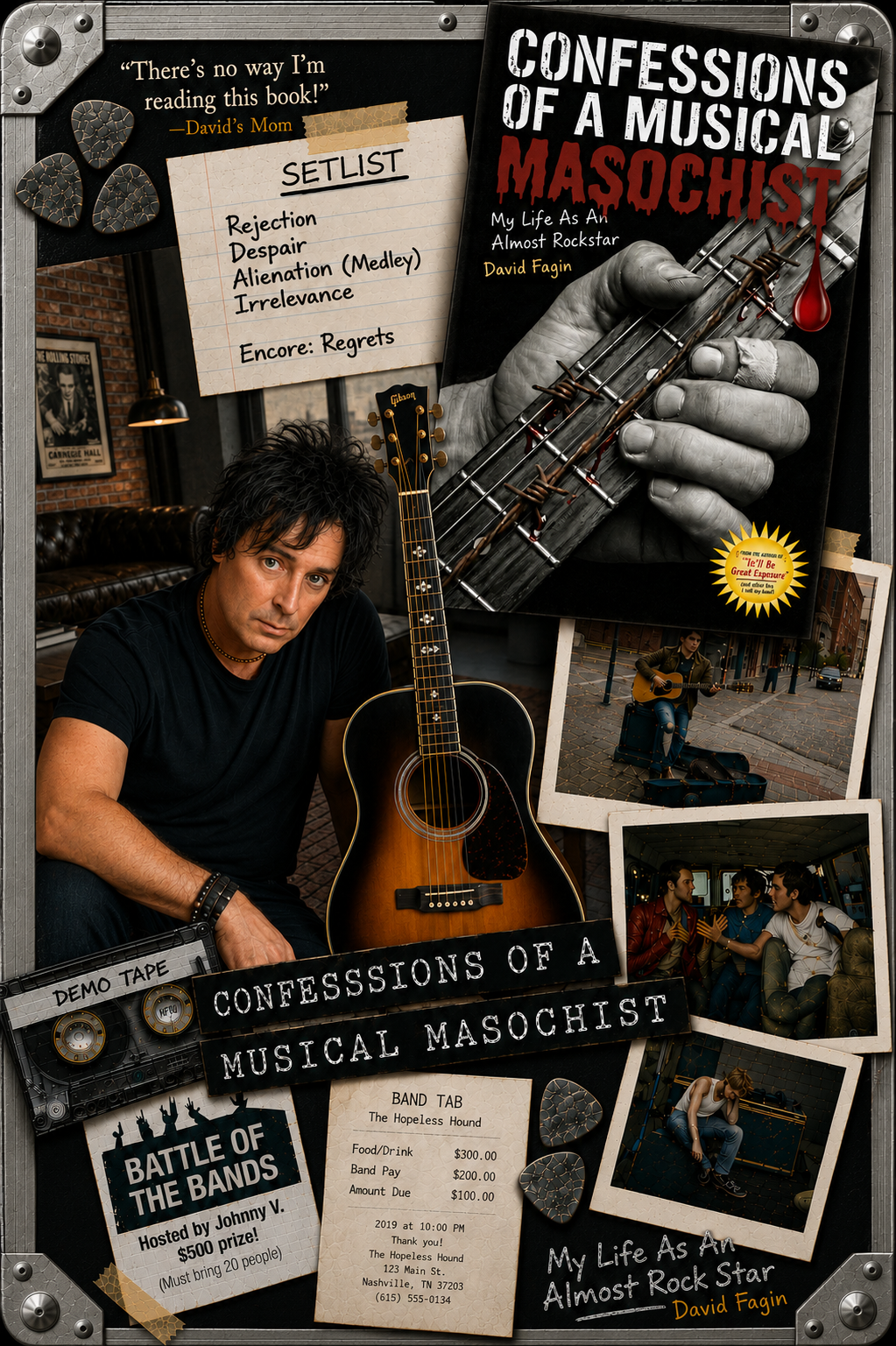
David Fagin Chronicles a Lifetime on the Edge of Rock Stardom in his New Memoir, Confessions of a Musical Masochist
Out on September 22nd, the musician, songwriter and former Rosenbergs frontman recounts his unlikely journey from an early internet-era battle with Universal Music and partnership with Napster to Robert Fripp, Jimmy Iovine, Howard Stern, Gene Simmons, Duran Duran, Oasis and decades of glorious near-misses.
Listen to a preview of the audiobook,
narrated by none other than the author himself
Hours before the biggest concert of his life, David Fagin was sitting in a New Jersey jail cell for stealing supermarket sushi.
His band, The Rosenbergs, was scheduled to open for Duran Duran at Jones Beach that evening. Miraculously, Fagin got bailed out of jail, fought his way through hours of Long Island traffic and still managed to make it to the gig on time.
Ironically, nearly 25 years later, he found himself in an Atlantic City nightclub playing an afterparty, for who else, but Duran Duran with his cover band The Counterfeiters.
The fine line between “making it” and “falling short” is at the heart of Confessions of a Musical Masochist: My Life As An Almost Rockstar, Fagin’s candid, funny and frequently unbelievable new memoir, out September 22, 2026 via Scout Media in association with Noshpit Entertainment.
With a foreword by journalist Rob Tannenbaum, co-author of I Want My MTV, the book traces nearly four decades of chasing a career in music through record deals, disastrous tours, industry feuds, empty clubs, national television, celebrity encounters, financial calamities and repeated opportunities to quit that Fagin somehow never took.
As Fagin writes early in the book: “Be prepared to have a safe dropped on your head 363 days a year. Once or twice a year, there’ll be a gig that makes everything feel worth it. A night where you think, This. This is why I do this.”
At the center of the story is The Rosenbergs, the New Jersey power-pop band Fagin formed in the 1990s. After years of showcases, personnel changes and near-deals with major labels, the group suddenly became a music-industry cause célèbre at the dawn of the digital era.
In 1999, The Rosenbergs were invited to perform on Farmclub.com, the heavily financed Universal Music TV show and label venture launched by Jimmy Iovine and Doug Morris. When Fagin received the performance agreement, he was stunned by what he viewed as an extraordinarily restrictive contract tied to the appearance. Rather than quietly sign it, he wrote an email criticizing the terms and sent it to other musicians.
The message, often credited as being the first to go viral, spread like wildfire throughout the industry.
Within days, the band was fielding interview requests from outlets including CNN, CNBC, the Los Angeles Times, Entertainment Weekly, and Spin and Wired. Universal executives threatened legal action. Then, in one of the stranger reversals in the memoir, the conversation shifted from suing The Rosenbergs to potentially signing them. Courtney Love reached out in support, and Fagin soon found himself breaking bread with Iovine in NYC whilst discussing how the two sides might resolve the standoff.
The episode pushed Fagin into the center of the emerging debate over artists, record labels and the internet. He began appearing on industry panels alongside figures including Jerry Harrison and Tina Weymouth of Talking Heads, Chuck D, Darryl McDaniels, Bob Ezrin and others, arguing for greater artist control at precisely the moment file sharing was beginning to destabilize the traditional record business.
In hindsight, The Rosenbergs seemed to have a strange habit of arriving early.
The Rosenbergs were one of the earliest acts to experience an industry-wide viral moment, before “going viral” became part of the cultural vocabulary and things like MP3’s were thought to be Star Wars droids. Years earlier, the group had also been involved in an ambitious attempt at one of the first live rock concerts streamed over the internet, only to watch the technology collapse in real time. Later, The Rosenbergs would structure a maverick-yet-unconventional deal that allowed them to retain ownership of their masters and would partner directly with Napster at the height of the file-sharing wars.
Photo caption: David Fagin; Photo credit: Noah ArkwrightLong before artist-owned masters, direct-to-fan digital distribution and viral music-industry moments became common talking points, Fagin and The Rosenbergs had already stumbled into all three. The recurring irony, and one of the book’s central themes, is that being early rarely meant being rewarded for it.
That Farmclub controversy also caught the attention of King Crimson’s Robert Fripp and his business partner David Singleton, who approached The Rosenbergs about becoming part of Discipline Global Mobile, their artist-focused independent company. The resulting agreement allowed the band to retain ownership of its masters and attempted to create a different relationship between artist and label years before ownership of masters became a mainstream music-business conversation.
The experiment was noble, complicated and, in classic Fagin fashion, financially disastrous.
The Rosenbergs then aligned themselves with Napster while much of the recording industry was trying to destroy it. Napster sponsored the band’s tour, put The Rosenbergs on its homepage and helped manufacture a special two-disc edition of the band’s album Mission: You, with a second “file-sharing” copy specifically intended for fans to give to friends. Thousands joined the band’s mailing list almost immediately. Their poor bass player was tasked with entering each address by hand, Amish-style.
To their utter dismay, the band soon discovered many of those new fans were too young to enter the clubs where The Rosenbergs had been booked to perform.
Thus, they dubbed it the No Fans Allowed Tour.
That combination of genuine music-business history and almost comically bad timing runs throughout Confessions of a Musical Masochist.
Fagin recounts sharing bills with artists including Duran Duran, No Doubt, The Strokes, Supergrass, Echo & the Bunnymen, Modern English,Night Ranger, Big Star’s Alex Chilton and others. He writes about kicking a soccer ball around an empty theater with Liam Gallagher during Oasis’ first U.S. tour; getting booted off the bill at the last minute at Bush’s first show in the states, working behind the scenes on concerts for U2, The Who, KISS, Stone Temple Pilots, Beck, Beastie Boys, Sheryl Crow, the Allman Brothers and Neil Diamond; watching Bob Dylan disappear from a festival before his band had seemingly finished; and attempting to pitch his own music to Butch Vig while working a Garbage concert, an act that nearly got him fired.
There is also the morning Fagin appeared on The Howard Stern Show alongside his childhood idol Gene Simmons, after convincing Simmons to join a discussion about record-industry treatment of artists. The Rosenbergs waited for hours, finally made it into the studio, and then watched much of their presence disappear from the television edit.
It was another fitting chapter in a career filled with moments when Fagin appeared to be inches from the center of the action, only to somehow remain on the outside. Like his landing the theme for Jenna Elfman’s CBS sitcom that followed the gargantuan Two and Half Men, then watching as the network slowly killed the show.
Behind the celebrity stories is a less glamorous reality familiar to generations of working musicians: playing empty rooms, sleeping on floors, driving through the night, losing money on tours, begging clubs for bookings then being blacklisted, replacing unreliable band members, funding recordings on credit cards and repeatedly watching supposedly career-changing opportunities disappear. To the point where he now compares himself to ‘Reek,’ the tortured, castrated former prince, courtesy of the Game of Thrones saga.
“In short, this is not a story about success. Or failure. It’s a story about survival,” Fagin writes. “And, while it’s no doubt hard to keep a successful band going, keeping an unsuccessful one going is even harder.”
That perspective eventually led Fagin through several musical reinventions. He spent years touring with journalist Rob Tannenbaum in the satirical duo Good for the Jews, later built a career performing with his Jersey shore cover band The Counterfeiters, and today fronts The Wankers, his deliberately over-the-top Britpop tribute built around Fagin’s alter ego, “Damon Gallagher.”
Tannenbaum’s foreword sets the tone for the book by cheerfully admitting he did not read it before writing it. After years performing alongside Fagin, he explains that he had already heard his friend’s best stories repeatedly and his worst stories even more often. He ultimately recommends the book anyway, particularly to anyone considering a career in entertainment. As a warning.
But beneath Fagin’s sarcasm and self-deprecation is a deeply personal story.
He grew up in a show-business household in New Jersey. His mother, Diane, performed for decades throughout the Catskills and had recorded for Decca and MGM as a young singer before her recording career collided with the upheaval surrounding the payola era. His father, Richard, was at once Fagin’s harshest critic, financial safety net, occasional manager and eventually his biggest supporter.
Their complicated relationship becomes one of the emotional through-lines of the book, culminating in Fagin’s dedicating the book to him.
For Fagin, the stories eventually add up to a question that extends far beyond music: What does success actually mean when the dream you have spent your life chasing never arrives in the form you expected? Further, what happens when it turns into a nightmare?
At an age when many musicians have long since traded vans, loading docks and empty clubs for stability, health insurance, and “something to fall back on”, Fagin is still playing. He’s still booking gigs. At least, trying to. And, against substantial evidence that the universe may be trying to tell him something, like Wile E. Coyote, he still believes tomorrow might be the day.
Confessions of a Musical Masochist: My Life As An Almost Rockstar will be released September 22nd, 2026 through Scout Media / Noshpit Entertainment.
http://www.davidfagin.net/